
The Secret Behind FRP Handrails
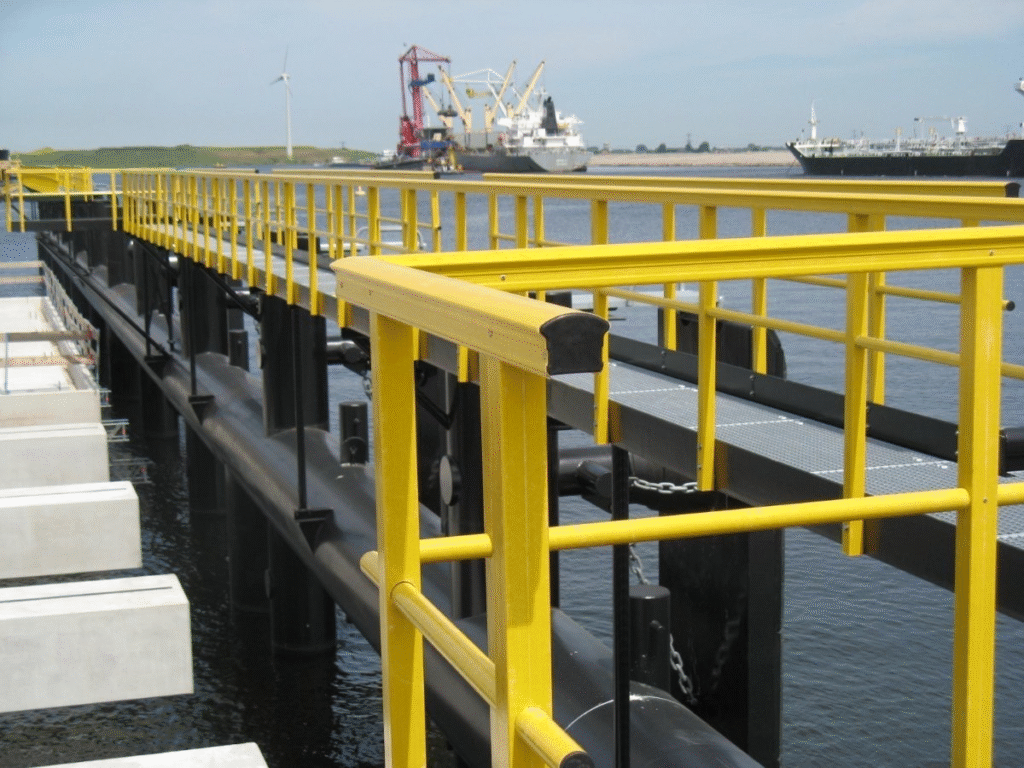
Have you ever wondered why more and more industrial and public projects are switching to FRP handrails instead of traditional steel or aluminum ones? At first glance, they look similar — sturdy rails protecting workers and structures. But behind that simple appearance lies one of the smartest material choices in modern construction.
1. The Hidden Strength Inside Fiberglass
FRP stands for Fiberglass Reinforced Plastic — a composite material made by combining strong glass fibers with a durable resin matrix. The result is a structure that’s both lightweight and incredibly strong.
Unlike metal, FRP doesn’t rust, doesn’t conduct electricity, and won’t react with chemicals or moisture. That’s why it’s trusted for offshore platforms, wastewater treatment plants, bridges, and industrial walkways, where safety and corrosion resistance are non-negotiable.
Engineers love FRP handrails because they can maintain high mechanical strength even under extreme environments — from humid coastal air to desert heat.
2. Why FRP Beats Traditional Metals
The “secret” behind FRP handrails’ popularity isn’t just their strength — it’s the freedom they give to design and maintenance teams.
Steel handrails require regular repainting, galvanizing, or rust removal. Aluminum, though lighter, can deform under impact and still oxidize over time.
FRP, on the other hand, offers:
- Long-term resistance to corrosion, UV, and chemicals
- No need for repainting or periodic maintenance
- Electrical insulation for safer operations
- Easy installation with modular fittings
This combination of properties reduces lifetime costs and extends service life well beyond that of traditional materials.
3. The Role of Design Innovation
Another secret lies in the way FRP handrails are made. They’re modular — built from pultruded profiles, elbows, joints, and kick plates that fit together easily.
That means engineers can design complex layouts (stairs, platforms, walkways) without welding or special tools.
Most systems today meet OSHA and ASTM standards, offering both structural integrity and long-term safety performance. The smooth, non-slip surface of FRP rails also provides better grip for workers, even in wet conditions.
4. FRP Handrails and the Future of Safe Infrastructure
As industries move toward sustainable, maintenance-free infrastructure, FRP handrails represent a key shift in engineering mindset.
They align with global sustainability goals — lower carbon footprint, less maintenance waste, and longer product lifecycles.
In sectors like marine, power, and chemical processing, FRP is no longer the alternative — it’s the new standard.
5. Where to Find Reliable FRP Handrails
If you’re planning your next construction or industrial project, choosing a reliable FRP handrail supplier is crucial. Look for manufacturers who understand international standards and can provide full customization support.
👉 To explore premium options, browse China’s high-quality FRP Handrails — designed for durability, safety, and long-term performance.
Final Thoughts
The secret behind FRP handrails is simple: they combine the best of engineering innovation and practical performance.
Lightweight yet strong, maintenance-free yet reliable — FRP handrails have quietly transformed how we think about industrial safety and durability.
In the end, the smartest structures aren’t the ones that shine the brightest — they’re the ones that last the longest.